


|
Seekers Home |


Why study the Bible?
We all have an innate need to experience something (or someone) greater than ourselves. Why?
Because we are finite (limited) in:
Knowledge - there are things we need to know or want to know but can't
Power - there are things we need to do or want to do but can't
Love - we're not as kind and caring as we want to be despite our best intentions
Being - our lives are short and sometimes painful
God is the name we've given to the One who is infinite (unlimited) in knowledge, power, love, and being. God knows everything that can be known, can do anything that can be done, loves us unconditionally and seeks our ultimate good, and possesses life without beginning or end.
Ultimate truth is therefore knowledge of God. Since as Christians we believe God is personal (has a personality and relates to us as one person to another), this knowledge is relational. Knowing God is exactly like knowing another human being.
How do we arrive at ultimate truth? Through experience:
My own personal experience of the holy; but because I'm finite I also need
Other experience of the holy; not just my contemporaries but also
All my human predecessors' experience of the holy
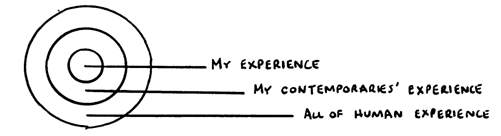
As we move out from the center of the circle, the truth we perceive has greater potential to be trustworthy, reliable, and authoritative. However, the further from the center, the more information there is to choose from. Given all this information, how do we select a "normative" model of ultimate truth?
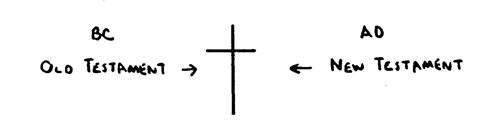
As Christians, we believe Jesus Christ is God's sufficient self-revelation. The life, death, and resurrection of Jesus show us all that we need to know to be in relationship with God. The Old Testament tells the story of Jesus' people and points forward to him. The New Testament tells the story of his, life, death, and resurrection, as well as how the earliest Christians understood these events, and points backward to him. He stands at the center of history (BC/AD) and at the center of the Bible.
Jesus is the Truth, the Way, and the Life. The Bible is his story.
That's why we study the Bible.

Parkwood
United Methodist Church
5123 Revere Rd.
Durham, NC 27713
(919) 544 - 1078
pumcoffice@parkwoodumc.org
Rev. Bob Kretzu, Pastor
For website questions or comments please email laura@lldenny.com.


